Plagiarism is bad.
That seems like a really obvious thing to say, but it is.
Plagiarism still happens.
That is a really sad thing to write, but it's still true.
Plagiarism is something that plays a large part in my life. As a History and English double major, I have to be even more careful than the average student in making sure that everything I write has been checked, double checked, and often triple checked for citation accuracy. Fear of plagiarism can keep me up at night sometimes, especially when I have multiple papers going at the same time.
Plagiarism is, according to the Merriam-Webster dictionary, "the act of using another person's words or ideas without giving credit to that person." This may seem easy to avoid, and, most of the time, it is.
Just last week, I received a lecture about plagiarism in one of my classes. My French Revolution professor handed out a sheet on plagiarism, informing us about her past experiences with plagiarism in papers as a professor. In order to prevent them from happening again, she hands out information on it and discusses it for a lengthy amount of time in class. We have to sign a sheet testifying that we have learned what plagiarism is and hand it in the day of the lecture. When we turn in our final drafts, we have to turn in an additional sheet, with our signatures, our paper titles, and the date, acknowledging, once again, that we understand that, if we have plagiarized any of the papers, at least we know what we have done.
We don't take plagiarism as a joke. (I would like to point out here that my professor did mention - in jest, mind you - that we sign our contracts in blood, and then followed up the plagiarism discussion with a documentary on the history of the guillotine. It is a class on the French Revolution, after all).
It can be easily avoided, though.
A handy rule of thumb which has saved me many times: when in doubt, cite it. Better to over cite, and cite something that didn't need citations, than to not cite it, and be pulled before a board or lose your place at the school for plagiarism.
Most things that are common knowledge do not need to be cited. That typically applies to names, dates, locations - that sort of thing. But if you only find it in one source, or if you're paraphrasing or taking a direct quote from an author, then it definitely has to be cited. This is the Purdue OWL's guide to avoiding plagiarism, which most likely explains the rules better than I ever could.
Showing posts with label French Rev Paper. Show all posts
Showing posts with label French Rev Paper. Show all posts
Wednesday, October 29, 2014

Wednesday, October 22, 2014
Choosing and Researching: Beginning the Term Paper
Today in class, our professor told us to choose a topic for our term paper from any time period in American history, and then blog about our topic and research ideas for it.
That threw me for a loop.
If you've read my About Me, you know that most of the things that I tend to study and read about for fun in history are European history - in fact, at this same moment, I am researching and writing a term paper for a class on the French Revolution, which is what I would like to specialize in during graduate school. Choosing that particular topic was relatively easy - I was able to come up with a couple of topics and wound up choosing the political fashions of Marie Antoinette and Georgiana, Duchess of Devonshire. They will probably turn up multiple times during my discussion of term paper research throughout the process, as I wind up doing research for both papers.
Because of my personal love of European history, focusing on a topic in American history is difficult. I enjoy studying the Civil War, so my first thought was perhaps studying the battles near my hometown, or the battle within my hometown. However, after thinking it over, I realized that not only is there way too much information on these battles, but that it would be difficult to get hold of in time for turning in my bibliography. My next thought was a president, or perhaps American spycraft. Spycraft seems to be a little too difficult to find sources on - while it is a fascinating topic, most of the spying that I am interested in is done within the context of European history. So that left a president.
My two all-time favorite presidents are Thomas Jefferson and Abraham Lincoln. So, I quickly narrowed my possible topics down to the two of them. I asked myself what it was about the two of them that fascinated me so much - why Jefferson? Why Lincoln?
What attracted me to Jefferson, I decided, was his ability to be an awkward nerd about life, and still be a genius. One of my favorite stories about him was that, as a student, he asked a girl out courting and, after she rejected him, suffered a headache for a day from embarrassment. I'm also fascinated by his wine collection and his time in France - why, out of all of the Founding Fathers, was it Jefferson who absorbed so much of French culture and characteristics? This seems especially interesting to me since his presidency is so intertwined with the Lewis and Clark Expedition, one of the most rough and tumble events in early America. I also love Monticello, Jefferson's house in Virginia - I've visited twice, and every time I enter I'm filled with greater respect for a man who was a genius ahead of his time, and yet also trapped within social conventions that he felt he could not escape.
What I find most fascinating about Abraham Lincoln is his role in the Civil War. I suppose (if I'm being completely honest) what I'm really fascinated by is his assassination. I conveniently already have a source for a paper on the Lincoln assassination in my dorm room with me: James Swanson's Manhunt, a book that I found fascinating the first time I read it, and continue to find fascinating.
That threw me for a loop.
If you've read my About Me, you know that most of the things that I tend to study and read about for fun in history are European history - in fact, at this same moment, I am researching and writing a term paper for a class on the French Revolution, which is what I would like to specialize in during graduate school. Choosing that particular topic was relatively easy - I was able to come up with a couple of topics and wound up choosing the political fashions of Marie Antoinette and Georgiana, Duchess of Devonshire. They will probably turn up multiple times during my discussion of term paper research throughout the process, as I wind up doing research for both papers.
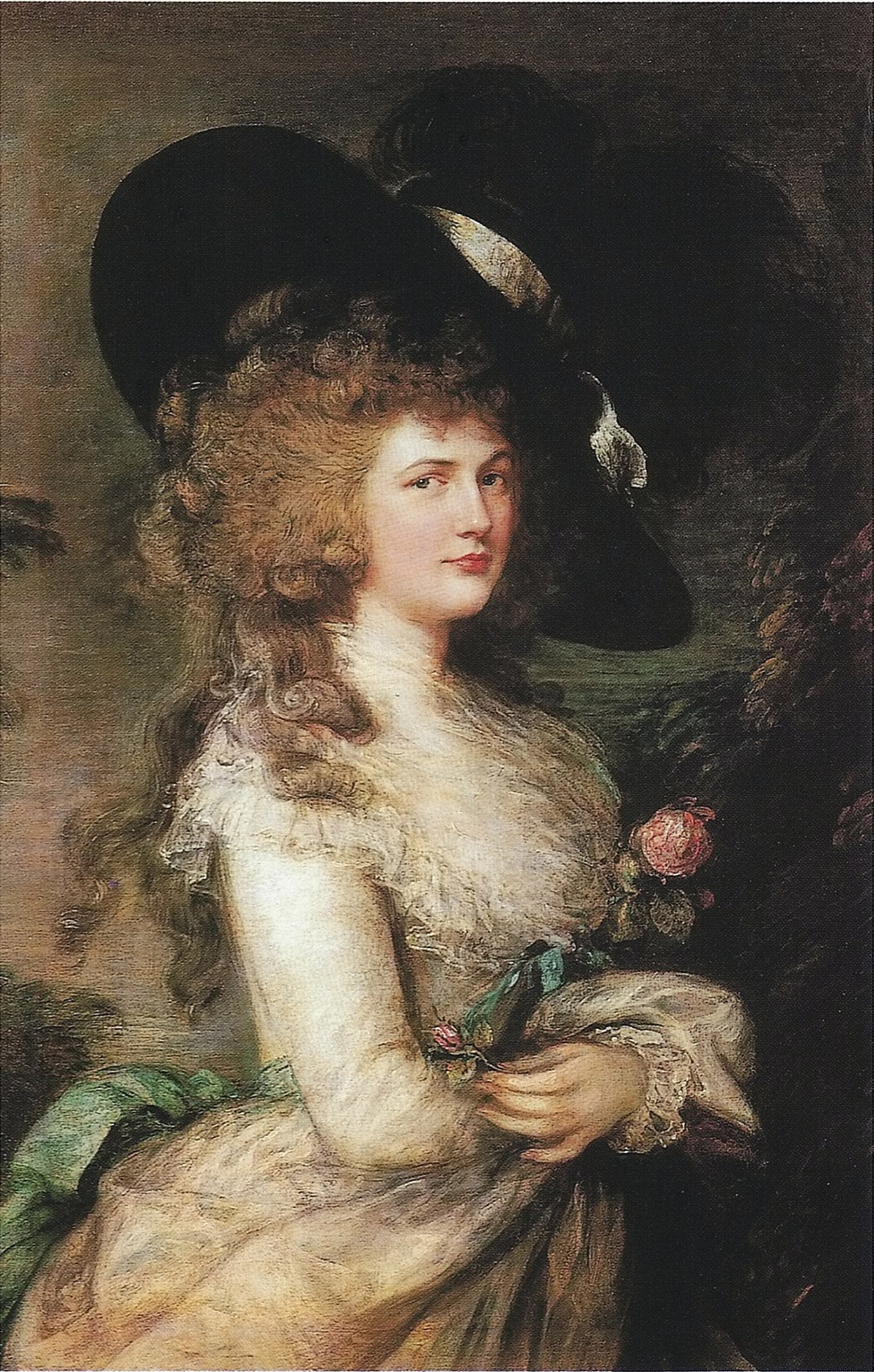 |
| Lady Georgiana Spencer, Duchess of Devonshire - Thomas Gainsborough |
My two all-time favorite presidents are Thomas Jefferson and Abraham Lincoln. So, I quickly narrowed my possible topics down to the two of them. I asked myself what it was about the two of them that fascinated me so much - why Jefferson? Why Lincoln?
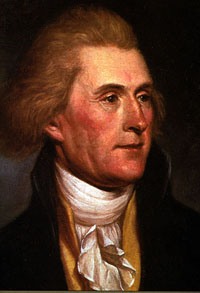 |
| Thomas Jefferson - Third President of the United States and Most Adorable Nerd |
 |
| Abraham Lincoln - The Glue that Held the Union Together |
After a long train of thought, I decided that my topic would be the Lincoln assassination, the chase for the assassins, and their trials and executions - a topic that, if necessary, I shrink after talking with my professor.
Then it came time to look at what I needed to do for research. The previous semester, I wrote a term paper on the influence of the mistress on court life at Louis XIV's Versailles, so I am very familiar with our ILL (interlibrary loan) system. I decided that the best course of action would be to turn to Swanson and see what he had listed in his bibliography, and see how many of those books were available at Spring Hill. After that, I could start looking for ebooks through my public library back home, primary sources through the National Archives, and maybe even microfiche newspaper announcements in the archives at nearby universities. A biography of the assassin, John Wilkes Booth, might not be a bad place to start, in order to gain an understanding of his actions. This might be where I start this weekend.
But first, I think I'll go back to the beginning - time to reread Manhunt. I'm looking forward to research!
 |
| Manhunt cover art - my first source for my paper! |
UPDATE: After discussion with my professor, I have narrowed my topic down to Mary Surratt, her involvement in the plot, and he subsequent trial. Surratt was the only woman tried among the conspirators, and was executed along with them for supposedly aiding and abetting John Wilkes Booth in his plot to assassinate the president. I have never found the evidence against Surratt very convincing, however - in fact, I have always felt that the military tribunal that tried the conspirators was attempting to try Booth in absentia through the figures of the conspirators, since Boston Corbett had killed Booth before he could be tried. I think of all the figures, Surratt's trial is the most fascinating, and I look forward eagerly to diving into my research!
Subscribe to:
Posts (Atom)